A Night at the Roxbury (1998)
It's not really that dopey or groany, more a sort of mild hum. It's flat by contrast to its source, the Saturday Night Live sketch about the clubhoppers, because it's going in the opposite direction to everything that made that sketch different. Chris Kattan and Will Ferrell developed the skit when they were with The Groundlings in Los Angeles, and perhaps even more on national TV and SNL, it stood out because it was a snapshot without dialogue. Even the source for that, real-life people-watching in a club, is a different experience. It might be fun to invent entire backstories, but watching that as the sort of routine feature movie melodrama plot that douses so much comedy spark anyway isn't as fun.
It's not really that dopey or groany, more a sort of mild hum. It's flat by contrast to its source, the Saturday Night Live sketch about the clubhoppers, because it's going in the opposite direction to everything that made that sketch different. Chris Kattan and Will Ferrell developed the skit when they were with The Groundlings in Los Angeles, and perhaps even more on national TV and SNL, it stood out because it was a snapshot without dialogue. Even the source for that, real-life people-watching in a club, is a different experience. It might be fun to invent entire backstories, but watching that as the sort of routine feature movie melodrama plot that douses so much comedy spark anyway isn't as fun.
The Housemaid (2025)
Rather than blending modes or smudging lines, this is like different types crashed into each and left a globby mass. There are moments where it suddenly tries to be camp, but it's too TV movie serious to carry that off. The worst parts are the sex scenes, terrible romance novel, screeching pop song cornball. The twist later is a good payoff, the one good idea for the movie, but it doesn't make the turn on the whole mess, justify it even as setup, and anyway gets drowned out by the way the whole thing is so laborious before and after. It goes on and on, one regress after another with most of it relegated to voiceover exposition, so much for all the production jazz. And it's one of those things that feels like it has 14 endings. Sydney Sweeney herself flickers between passable and astonishingly bad, as in by contrast to the melodramatic acting even in excess of Brandon Sklenar or Amanda Seyfried, a startling lack of presence.
Rather than blending modes or smudging lines, this is like different types crashed into each and left a globby mass. There are moments where it suddenly tries to be camp, but it's too TV movie serious to carry that off. The worst parts are the sex scenes, terrible romance novel, screeching pop song cornball. The twist later is a good payoff, the one good idea for the movie, but it doesn't make the turn on the whole mess, justify it even as setup, and anyway gets drowned out by the way the whole thing is so laborious before and after. It goes on and on, one regress after another with most of it relegated to voiceover exposition, so much for all the production jazz. And it's one of those things that feels like it has 14 endings. Sydney Sweeney herself flickers between passable and astonishingly bad, as in by contrast to the melodramatic acting even in excess of Brandon Sklenar or Amanda Seyfried, a startling lack of presence.
The Invite (2026)
"I get a lot of value out of it." That's an asinine enough comment about anything, before you hear the context of it here, the sort of cloddish language common in business, but betraying similar expedience when used for precious "spiritual" expression. The context of this line, delivered by Edward Norton, makes it one of the funniest, and the sharpest, most deft take on the whole. Will McCormack and Rashida Jones wrote it, from the Spanish original by Cesc Gay -- he had a theatrical version and a 2020 film version -- and Olivia Wilde directs herself and Seth Rogen, Penelope Cruz and Norton in savory, not so typical roles for all. She and her ensemble have a great bustle, talking on each other's heels, with a My Dinner with Andre dynamic, back and forth between what would be the esoteric, more like heady pop mystic, and the banal, or perhaps the inversion of those, the banal of the mystic psychosexual and the mysterious of the banal. It's the perpetual conundrum of the ecstatic, which works even with more common ideals: the very thing we want to lift us to some greater plane ends up making us devalue the rest or the other. The movie is best with a bounding pace to unraveling, and settles into a bit too well-made profundity in the last act, when the serious implications were just as easily at hand.
8/11/26
"I get a lot of value out of it." That's an asinine enough comment about anything, before you hear the context of it here, the sort of cloddish language common in business, but betraying similar expedience when used for precious "spiritual" expression. The context of this line, delivered by Edward Norton, makes it one of the funniest, and the sharpest, most deft take on the whole. Will McCormack and Rashida Jones wrote it, from the Spanish original by Cesc Gay -- he had a theatrical version and a 2020 film version -- and Olivia Wilde directs herself and Seth Rogen, Penelope Cruz and Norton in savory, not so typical roles for all. She and her ensemble have a great bustle, talking on each other's heels, with a My Dinner with Andre dynamic, back and forth between what would be the esoteric, more like heady pop mystic, and the banal, or perhaps the inversion of those, the banal of the mystic psychosexual and the mysterious of the banal. It's the perpetual conundrum of the ecstatic, which works even with more common ideals: the very thing we want to lift us to some greater plane ends up making us devalue the rest or the other. The movie is best with a bounding pace to unraveling, and settles into a bit too well-made profundity in the last act, when the serious implications were just as easily at hand.
Save the Green Planet (2003)
The source of Bugonia, which was going to be an English-language remake directed by the same Korean writer and director, Jang Joon-hwan, until he backed out for health concerns. This also partly accounts for why Bugonia wasn't like Yorgos Lanthimos's other movies. Lanthimos cooled not only some of his own excesses, but the fast flourish Korean style. The original has the benefit of being more offhand about it's story by virtue of that very kinetic stylization, but it does drag things out, especially towards the end, into action suspense concoction. At one point, a martial arts fight complete with levitation moves juts in. It turns out to be an imagination of one of the characters, but shows the source of this style and what it moves towards.
The source of Bugonia, which was going to be an English-language remake directed by the same Korean writer and director, Jang Joon-hwan, until he backed out for health concerns. This also partly accounts for why Bugonia wasn't like Yorgos Lanthimos's other movies. Lanthimos cooled not only some of his own excesses, but the fast flourish Korean style. The original has the benefit of being more offhand about it's story by virtue of that very kinetic stylization, but it does drag things out, especially towards the end, into action suspense concoction. At one point, a martial arts fight complete with levitation moves juts in. It turns out to be an imagination of one of the characters, but shows the source of this style and what it moves towards.
The Devil Wears Prada 2 (2026)
The sort of sequel that contrives rapprochement for all the main characters regardless of what they were before and whatever antagonism was the attraction of the first movie. Or has any sequel ever quite done it like this? Mea culpas and hugs and appreciation and newfound buddy meets. It's kind of like what Christmas specials do with series.
8/3/26
The sort of sequel that contrives rapprochement for all the main characters regardless of what they were before and whatever antagonism was the attraction of the first movie. Or has any sequel ever quite done it like this? Mea culpas and hugs and appreciation and newfound buddy meets. It's kind of like what Christmas specials do with series.
Deep Water (2026)
A group of smaller production companies that includes Gene Simmons got Renny Harlin, of Die Hard 2 and Deep Blue Sea fame, to direct their own airplane sharks genre movie. Sharks on a plane? Even the combo no longer seems like Airport meets Jaws, as so many more recent B-movie, medium market to bottom dwelling attempts have been done, as much from just the shark movie line itself. But at this point, punching up has less reward than punching down. This movie is competent enough to be perfectly formulaic and bland, and doesn't have even the charm of the bigger production B-movie silliness of Deep Blue Sea.
A group of smaller production companies that includes Gene Simmons got Renny Harlin, of Die Hard 2 and Deep Blue Sea fame, to direct their own airplane sharks genre movie. Sharks on a plane? Even the combo no longer seems like Airport meets Jaws, as so many more recent B-movie, medium market to bottom dwelling attempts have been done, as much from just the shark movie line itself. But at this point, punching up has less reward than punching down. This movie is competent enough to be perfectly formulaic and bland, and doesn't have even the charm of the bigger production B-movie silliness of Deep Blue Sea.
Skyscraper (1996)
Nominee for worst performance ever: Anna Nicole Smith. The voice, the face with expressions that most of the time look like she's smelling something bad. Her own performance, perhaps. While this cheap ripoff of Die Hard has plenty of other performances and features to gawk and balk and laugh at, Smith out-strips them all.
Nominee for worst performance ever: Anna Nicole Smith. The voice, the face with expressions that most of the time look like she's smelling something bad. Her own performance, perhaps. While this cheap ripoff of Die Hard has plenty of other performances and features to gawk and balk and laugh at, Smith out-strips them all.
Cool as Ice (1991)
Vanilla Ice plays the main character in a movie that justifies behaving like an absolute joker to win a girl. Good thing the clothes rack of a "rapper" character he's playing is named Johnny. RiffTrax git wit it.
7/27/26
Vanilla Ice plays the main character in a movie that justifies behaving like an absolute joker to win a girl. Good thing the clothes rack of a "rapper" character he's playing is named Johnny. RiffTrax git wit it.
Dead Man's Wire (2025)
Gus Van Sant's homage to Dog Day Afternoon, if not solely for that purpose. Based on a similar true event in the 70s, a hostage crisis that got national attention, Van Sant even cast Al Pacino. Dacre Montgomery looks like Mark Slade, the actor who played Blue on High Chaparral, and Cary Elwes is doing a Columboesque Serpico. It doesn't have the speculative air of Elephant, nor the social satire of To Die For. For the former, I won't say it's a relief, but not necessarily a bad thing, as playing it more straight allows more of the events to show through, but it definitely lacks the zing of the latter. Pacino's hambone Southern shtick is not that, nor like his Dog Day Afternoon performance, nor for any reason I'm aware of.
Gus Van Sant's homage to Dog Day Afternoon, if not solely for that purpose. Based on a similar true event in the 70s, a hostage crisis that got national attention, Van Sant even cast Al Pacino. Dacre Montgomery looks like Mark Slade, the actor who played Blue on High Chaparral, and Cary Elwes is doing a Columboesque Serpico. It doesn't have the speculative air of Elephant, nor the social satire of To Die For. For the former, I won't say it's a relief, but not necessarily a bad thing, as playing it more straight allows more of the events to show through, but it definitely lacks the zing of the latter. Pacino's hambone Southern shtick is not that, nor like his Dog Day Afternoon performance, nor for any reason I'm aware of.
The Death of Robin Hood (2026)
It's a decent drama against the grain of Robin Hood lore, if it does reverse the affectation and play a bit hard on the muckraking. It's actually very similar to Logan, writer and director Michael Sarnoski parting from the source, the 17th century ballad Robin Hood's Death, by adding the young girl, daughter of Little John, as well as changing the ballad's betrayal by the prioress. All this turns the tale into a mea culpa of Robin Hood for the violence and harm he wrought, if nothing else, and something of a self-immolation, and swapping other legendary characters, Guy of Gisborne for Red Roger, if the original is more interesting for the prioress for similar reasons.
It's a decent drama against the grain of Robin Hood lore, if it does reverse the affectation and play a bit hard on the muckraking. It's actually very similar to Logan, writer and director Michael Sarnoski parting from the source, the 17th century ballad Robin Hood's Death, by adding the young girl, daughter of Little John, as well as changing the ballad's betrayal by the prioress. All this turns the tale into a mea culpa of Robin Hood for the violence and harm he wrought, if nothing else, and something of a self-immolation, and swapping other legendary characters, Guy of Gisborne for Red Roger, if the original is more interesting for the prioress for similar reasons.
Disclosure Day (2026)
A wad of bluster similar to Ready Player One. At first, it seems to be doing something interesting by falling into the middle of things so we're having to discover what's going on. But the next segment in the apartment with Emily Blunt and Wyatt Russell is so bad, everything like establishment shot, and this is everything in that overawed, hyped-up establishment, all the relationship stuff mashed in, quick shots edited in as pushy exposition, working up to the cardinal flying in as a magical moment, which just seems even louder, hackish pushy after the rest. It's Close Encounters injected with steroidal nanobots, and doesn't show up something like Mercy (see below).
A wad of bluster similar to Ready Player One. At first, it seems to be doing something interesting by falling into the middle of things so we're having to discover what's going on. But the next segment in the apartment with Emily Blunt and Wyatt Russell is so bad, everything like establishment shot, and this is everything in that overawed, hyped-up establishment, all the relationship stuff mashed in, quick shots edited in as pushy exposition, working up to the cardinal flying in as a magical moment, which just seems even louder, hackish pushy after the rest. It's Close Encounters injected with steroidal nanobots, and doesn't show up something like Mercy (see below).
The Apprentice (2024)
Director Ali Abbasi manages a grainy enough involvement beyond the grainy look and other faux verite indicators. The script by Gabriel Sherman works best as a tidy little comeuppance with Roy Cohn serving as the example and the most obvious person to learn the lesson spiraling well out to oblivion within the frame of the portrait, let alone where he is now. There's a kind of record of transition, without delving too much into the psychological causes, something a movie would be limited for anyway, and it's a good reminder not only of where Trump came from, but the specific contribution of Cohn. Sebastian Stan and Jeremy Strong both give performances beyond imitation.
Director Ali Abbasi manages a grainy enough involvement beyond the grainy look and other faux verite indicators. The script by Gabriel Sherman works best as a tidy little comeuppance with Roy Cohn serving as the example and the most obvious person to learn the lesson spiraling well out to oblivion within the frame of the portrait, let alone where he is now. There's a kind of record of transition, without delving too much into the psychological causes, something a movie would be limited for anyway, and it's a good reminder not only of where Trump came from, but the specific contribution of Cohn. Sebastian Stan and Jeremy Strong both give performances beyond imitation.
Mercy (2026)
After initial goofiness, it gets engaging, though it keeps everything at a fluffed up level, then keeps making curves on the signature, looping things back in flourishes, to ludicrous points, almost like a spoof skit. Chris Pratt is workably good, shows some acting chops on a useful level, and actually holds it together.
7/23/26
After initial goofiness, it gets engaging, though it keeps everything at a fluffed up level, then keeps making curves on the signature, looping things back in flourishes, to ludicrous points, almost like a spoof skit. Chris Pratt is workably good, shows some acting chops on a useful level, and actually holds it together.
Captain Marvel (2019)
A bit squeakier than the sharper smart-assedness of the Guardians of the Galaxy or Deadpool movies, and the formula can't help showing more just by this being one of so many in the line by its time, but it has its perks: Brie Larson's underplaying manner, a nice twist on good guys / bad guys, a scene with a Blockbuster video store that plays more with the frame than time.
A bit squeakier than the sharper smart-assedness of the Guardians of the Galaxy or Deadpool movies, and the formula can't help showing more just by this being one of so many in the line by its time, but it has its perks: Brie Larson's underplaying manner, a nice twist on good guys / bad guys, a scene with a Blockbuster video store that plays more with the frame than time.
Walking and Talking (1996)
Either badly edited by mistake or at someone else's instruction, or poorly timed by the director, the scenes cut off as if trying to avoid milking, but trying to be another kind of cutesy, it's often just awkward. While it has some good observations and strokes, because of the timing it never gets quite over a staged feeling. When did romantic comedy become rom-com? The term was used as early as the 60s to save space in news media, but what we think of as the rom-com now is widely considered to have started with When Harry Met Sally. The real tribute is owed to Annie Hall, although the way these comedies of mores have become formulaic makes them not the same.
Either badly edited by mistake or at someone else's instruction, or poorly timed by the director, the scenes cut off as if trying to avoid milking, but trying to be another kind of cutesy, it's often just awkward. While it has some good observations and strokes, because of the timing it never gets quite over a staged feeling. When did romantic comedy become rom-com? The term was used as early as the 60s to save space in news media, but what we think of as the rom-com now is widely considered to have started with When Harry Met Sally. The real tribute is owed to Annie Hall, although the way these comedies of mores have become formulaic makes them not the same.
Just Mercy (2019)
What we get of Michael B. Jordan is limited to such a solemn tone, it's as if someone -- director Destin Daniel Cretton? -- was worried there might not be enough gravitas to his indignation. Others, like Jamie Foxx and Tim Blake Nelson, get to breath more in their characters. Despite touches that are more reserved, the film does break out for a heartstrings crescendo. The title presents an aporia: what is just requires no mercy and mercy requires no justice. Unless it just means just mercy, by itself. Discuss amongst yourselves.
What we get of Michael B. Jordan is limited to such a solemn tone, it's as if someone -- director Destin Daniel Cretton? -- was worried there might not be enough gravitas to his indignation. Others, like Jamie Foxx and Tim Blake Nelson, get to breath more in their characters. Despite touches that are more reserved, the film does break out for a heartstrings crescendo. The title presents an aporia: what is just requires no mercy and mercy requires no justice. Unless it just means just mercy, by itself. Discuss amongst yourselves.
Docstalk: shaggy, sophisticated, compelling and confusing
A Double Life (2023)
A documentary about Stephen Bingham, civil rights lawyer, later with Bay Area Legal Aid, who fled the country after being accused of aiding Black Panther George Jackson's escape from San Quentin, is remarkably not quite coherent. Director Catherine Masud seems to think we'll keep up or catch up to all the threads of the story at the elliptical, jumping pace. But there are times when you can't be sure what the antecedent of a reference is, as when someone mentions evidence about a crime, but there's been more than one mentioned, or you don't know exactly where in the chronology a scene is or refers to before it's finished.
The Rainbow (2019)
About the restaurant bar owned by the same people as Whiskey a Go Go in L.A., the chummy anecdotal approach testifies to the homey generosity of the family that runs the place, their staff, and rock stars and hangers on alike, through the decades of the various waves of popularity, perhaps no better indexed than by the cross-section of the private drinking group Hollywood Vampires: Alice Cooper, Keith Moon, Ringo Starr, Harry Nilsson, Micky Dolenz, John Lennon, Joe Walsh, John Belushi. Though it tilted towards hard rock and metal by the 80s and 90s, the participants there and here, among them Gene Simmons, Ozzy Osbourne, porn star Ron Jeremy, hold up the more longstanding and general rock 'n' roll ethos of welcoming outcasts.
Eno (2024)
This was made with a generative code (basically a random number generator) so that every time it's shown -- in exhibition situations -- it has a different order. That doesn't work for video copies: once copied, there's no further reordering. Director Gary Hustwit (Helvetica) and company followed suit of Brian Eno's generative concept of art, mostly music in his practice, which is mainly about making works on the model of evolution, so that they have a function of change -- well, different from the usual, beyond typical repetition of notes, bars, verses, etc. As fancy as it all sounds, apart from the order of scenes, for the movie it's mostly decorous transitions, with the scenes showing how approachable Eno is with all of it.
Whatever It Takes: Inside the eBay Scandal (2024)
The story of eBay using a campaign of intimidation and harassment against a couple who ran a website that commented on eBay is compelling enough, and is worth knowing about as another case of conduct that even goes on, let alone is acceptable. And as for plausible deniability, how can one sense of executive oversight be better than the other? This tells the story and doesn't get too much in the way.
7/14/26
A Double Life (2023)
A documentary about Stephen Bingham, civil rights lawyer, later with Bay Area Legal Aid, who fled the country after being accused of aiding Black Panther George Jackson's escape from San Quentin, is remarkably not quite coherent. Director Catherine Masud seems to think we'll keep up or catch up to all the threads of the story at the elliptical, jumping pace. But there are times when you can't be sure what the antecedent of a reference is, as when someone mentions evidence about a crime, but there's been more than one mentioned, or you don't know exactly where in the chronology a scene is or refers to before it's finished.
The Rainbow (2019)
About the restaurant bar owned by the same people as Whiskey a Go Go in L.A., the chummy anecdotal approach testifies to the homey generosity of the family that runs the place, their staff, and rock stars and hangers on alike, through the decades of the various waves of popularity, perhaps no better indexed than by the cross-section of the private drinking group Hollywood Vampires: Alice Cooper, Keith Moon, Ringo Starr, Harry Nilsson, Micky Dolenz, John Lennon, Joe Walsh, John Belushi. Though it tilted towards hard rock and metal by the 80s and 90s, the participants there and here, among them Gene Simmons, Ozzy Osbourne, porn star Ron Jeremy, hold up the more longstanding and general rock 'n' roll ethos of welcoming outcasts.
Eno (2024)
This was made with a generative code (basically a random number generator) so that every time it's shown -- in exhibition situations -- it has a different order. That doesn't work for video copies: once copied, there's no further reordering. Director Gary Hustwit (Helvetica) and company followed suit of Brian Eno's generative concept of art, mostly music in his practice, which is mainly about making works on the model of evolution, so that they have a function of change -- well, different from the usual, beyond typical repetition of notes, bars, verses, etc. As fancy as it all sounds, apart from the order of scenes, for the movie it's mostly decorous transitions, with the scenes showing how approachable Eno is with all of it.
Whatever It Takes: Inside the eBay Scandal (2024)
The story of eBay using a campaign of intimidation and harassment against a couple who ran a website that commented on eBay is compelling enough, and is worth knowing about as another case of conduct that even goes on, let alone is acceptable. And as for plausible deniability, how can one sense of executive oversight be better than the other? This tells the story and doesn't get too much in the way.
Sam Neill died.
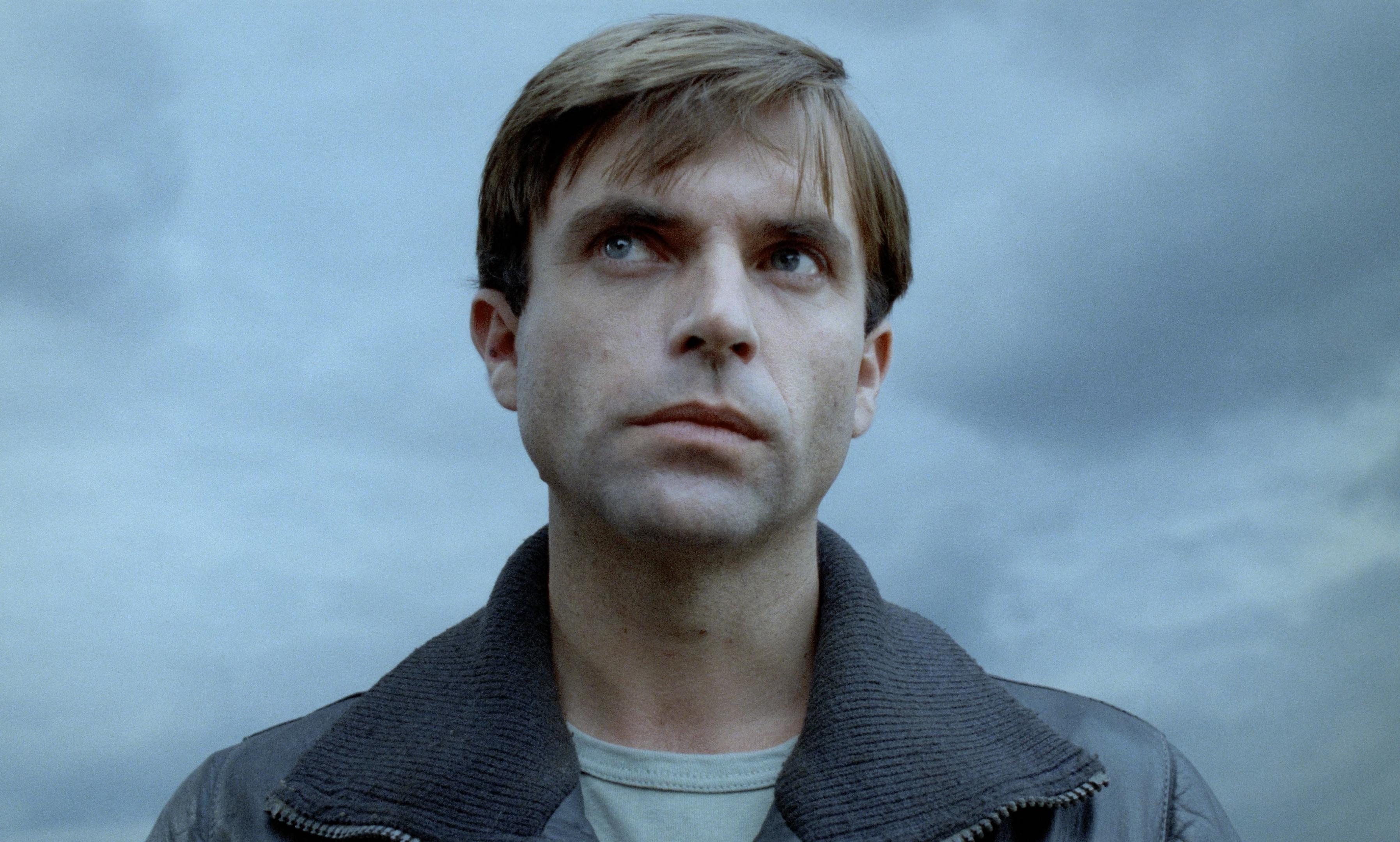
Much more than Jurassic Park, check out:
A Cry in the Dark
Possession
Reilly: Ace of Spies
Much more than Jurassic Park, check out:
A Cry in the Dark
Possession
Reilly: Ace of Spies
My Old Ass (2024)
The cleverest stroke is the way this poses one of the most difficult parts of living on in the manner of other kinds of regrets, or choices if you could relive your life (see "eternal return"), not quite a twist, more a surprise comparison delivery. Written and directed by Megan Park, with her dry soft approach delivered well by a cast including Maisy Stella, Aubrey Plaza and Percy Hynes White, it manages to hit its thematic points, including the biggest, despite not really doing that much with its main device.
The cleverest stroke is the way this poses one of the most difficult parts of living on in the manner of other kinds of regrets, or choices if you could relive your life (see "eternal return"), not quite a twist, more a surprise comparison delivery. Written and directed by Megan Park, with her dry soft approach delivered well by a cast including Maisy Stella, Aubrey Plaza and Percy Hynes White, it manages to hit its thematic points, including the biggest, despite not really doing that much with its main device.
Videoheaven (2025)
Backyard pedantic. Though this has interesting material, it becomes plodding well before its nearly three-hour run time. The ruminations on the experience of the video store via movie references circle around the same sort of existential social impressions, stating lots of obvious things in a manner like a college paper or the way museum captions usher us to observations or reactions as if we might not have them ourselves, and make the lack of other interesting information more obvious.
Backyard pedantic. Though this has interesting material, it becomes plodding well before its nearly three-hour run time. The ruminations on the experience of the video store via movie references circle around the same sort of existential social impressions, stating lots of obvious things in a manner like a college paper or the way museum captions usher us to observations or reactions as if we might not have them ourselves, and make the lack of other interesting information more obvious.
Hammer: Heroes, Legends and Monsters (2024)
Interesting mix of insiders and famous viewers such as John Carpenter, Tim Burton, Joe Dante, and both archival and new material, with quite a bit of detail about the financial side of the business to go along with the cultural output, and nice attention to contributors like composer James Bernard. Those who didn't grow up with Peter Cushing and Christopher Lee on late night movie fills for local TV stations in the U.S., let alone seeing these at theaters in the 50s and 60s, can get a crash course in this part of movie history, where the Brits turned the tables on the Yank movie invasion.
7/7/26
Interesting mix of insiders and famous viewers such as John Carpenter, Tim Burton, Joe Dante, and both archival and new material, with quite a bit of detail about the financial side of the business to go along with the cultural output, and nice attention to contributors like composer James Bernard. Those who didn't grow up with Peter Cushing and Christopher Lee on late night movie fills for local TV stations in the U.S., let alone seeing these at theaters in the 50s and 60s, can get a crash course in this part of movie history, where the Brits turned the tables on the Yank movie invasion.
Supergirl (2026)
It's a fine line between snappy and sloppy. All the elements are here, piled in, run off, but without any particular flow or pace, and it's especially noticeable in the beginning when you're trying to get oriented. Plus, there's the diminishing returns. We've seen this act so many times now -- the mixed bag of Guardians of the Galaxy, Star Wars, a back i.e. origin story (I thought we'd actually gotten away from that), toss in some Mad Max Fury Road -- that if it's not decent it gets tiresome easily. And though this is from the comics, too, and probably literally from the comic they based this on, there's all that usual Superman contrivance. When you basically make Superman, whatever super-person version, the catch-all of wish fulfillment, you have to concoct ways to reduce the absurd lack of limit, pull things out of -- er, the air. A green sun? What, a Kryptonite sun? Or it's like Green Lantern now, with color involved in the powers?
7/1/26
It's a fine line between snappy and sloppy. All the elements are here, piled in, run off, but without any particular flow or pace, and it's especially noticeable in the beginning when you're trying to get oriented. Plus, there's the diminishing returns. We've seen this act so many times now -- the mixed bag of Guardians of the Galaxy, Star Wars, a back i.e. origin story (I thought we'd actually gotten away from that), toss in some Mad Max Fury Road -- that if it's not decent it gets tiresome easily. And though this is from the comics, too, and probably literally from the comic they based this on, there's all that usual Superman contrivance. When you basically make Superman, whatever super-person version, the catch-all of wish fulfillment, you have to concoct ways to reduce the absurd lack of limit, pull things out of -- er, the air. A green sun? What, a Kryptonite sun? Or it's like Green Lantern now, with color involved in the powers?
Comedy(d)rama
Little Brother (2026)
Stock comedy with delivery sometimes so rote it's like they're reading the treatment. John Cena has to bear the brunt of this because he's the ostensible straight man, but it's director Matt Spicer who makes it worse for Cena, requiring dragged out modular reaction shots. Eric Andre doesn't go over big as the source of chaos/laughs mainly because of the material. He's dropped into a vehicle that uses his persona readymade and the attempts at building a character are forced clownishness, when not pure leaps of zany.
Game Night (2018)
All in the delivery. The premise is obvious, seems commonplace even if it's not re-used, and the structure doesn't add anything particularly novel. But there's still plenty of wit in the dialogue and in the handling of it by cast and directors, so it's firing off and rolling along all the way. The dash of it all keeps it from self-conscious cutesiness or cloying caricatures.
Power Ballad (2026)
Mercifully shifts from two beaten paths, the wedding singer comedy and the big public come-clean. It's more serious in the feel-good way, but also does a nice job playing that more lightly for the ending. There's one great scene where Paul Rudd's character seeks help from a band mate he'd slagged off, that takes a path less sculpted and thus gives a more candid chain of reactions. The rest of the movie never quite reaches that level, and the payoff moment for the meeting with the star doesn't match it, and shows most a vacillation of modes, madcap, caper and earnest.
Little Brother (2026)
Stock comedy with delivery sometimes so rote it's like they're reading the treatment. John Cena has to bear the brunt of this because he's the ostensible straight man, but it's director Matt Spicer who makes it worse for Cena, requiring dragged out modular reaction shots. Eric Andre doesn't go over big as the source of chaos/laughs mainly because of the material. He's dropped into a vehicle that uses his persona readymade and the attempts at building a character are forced clownishness, when not pure leaps of zany.
Game Night (2018)
All in the delivery. The premise is obvious, seems commonplace even if it's not re-used, and the structure doesn't add anything particularly novel. But there's still plenty of wit in the dialogue and in the handling of it by cast and directors, so it's firing off and rolling along all the way. The dash of it all keeps it from self-conscious cutesiness or cloying caricatures.
Power Ballad (2026)
Mercifully shifts from two beaten paths, the wedding singer comedy and the big public come-clean. It's more serious in the feel-good way, but also does a nice job playing that more lightly for the ending. There's one great scene where Paul Rudd's character seeks help from a band mate he'd slagged off, that takes a path less sculpted and thus gives a more candid chain of reactions. The rest of the movie never quite reaches that level, and the payoff moment for the meeting with the star doesn't match it, and shows most a vacillation of modes, madcap, caper and earnest.
Lorne (2026)
Director Morgan Neville and co-writers Alan Lowe and Jake Hostetter use the limitations of the subject -- the well-established and professed refusal of Lorne Michaels to be a main subject, about Saturday Night Live or even his own story -- and the medium to make a sly portrait and tribute to the man who perhaps more than anyone is worthy of the term "showrunner."
Director Morgan Neville and co-writers Alan Lowe and Jake Hostetter use the limitations of the subject -- the well-established and professed refusal of Lorne Michaels to be a main subject, about Saturday Night Live or even his own story -- and the medium to make a sly portrait and tribute to the man who perhaps more than anyone is worthy of the term "showrunner."
Special items
Sam Neill
Movie Brains T-shirt
Links
Index
Facebook group
Movie comments
Best by year
Movie calendar
Movie Brains T-shirt
Film/Script
Movie Brains (vol. 2)
Fixion home
Pages
2026
2025b
2025
2024b
2024
2023b
2023
2022b
2022
2021
2020
2019
Rare Birds
Monster Movie Survey
Backlog
Enter the Lists
Anatomy of Bad
The (TV) Show Pantheon
T-shirts
About
Entries by Greg Macon for the Facebook group Movie Brains, related to film comments on this website, Fixion. Text for movie comments this page © 2026 Greg Macon. Banner image and quote from Earth vs. The Flying Saucers.
Contact: mail@fixionsytes.net